deutsch englisch spanisch französisch italienisch
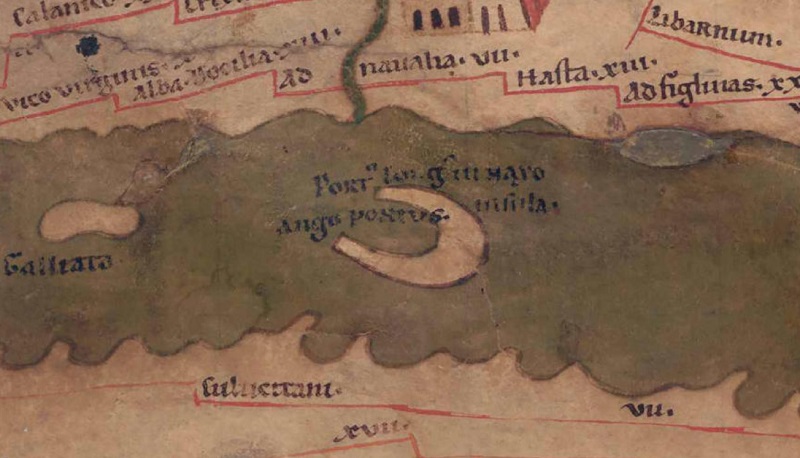
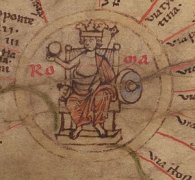
Ausschnitt aus der Tabula Peutingeriana - Rom

Tabula Peutingeriana – Display individuale

Toponimo TP (sciolto):

Portus longus in Naxo insula

Nome (moderno):

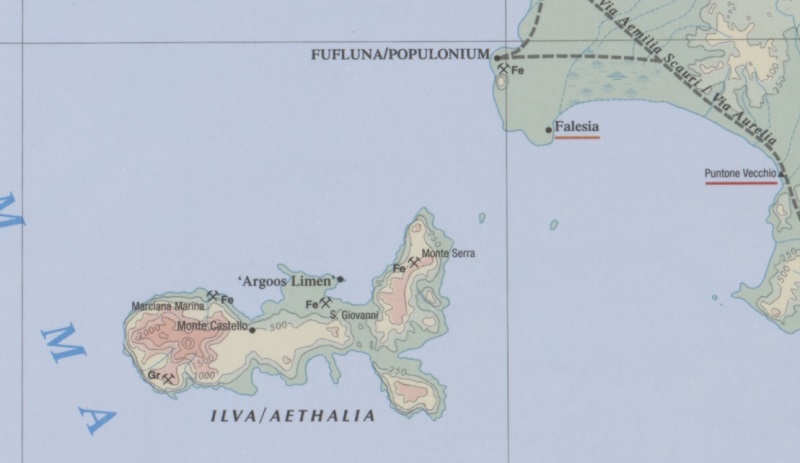
Porto Azzurro (TIR)

Foglio:
Al dettaglio dell'immagine
Toponimo davanti
Toponimo dopo
Foglio alternativo: ---
Foglio (Barrington 2000)
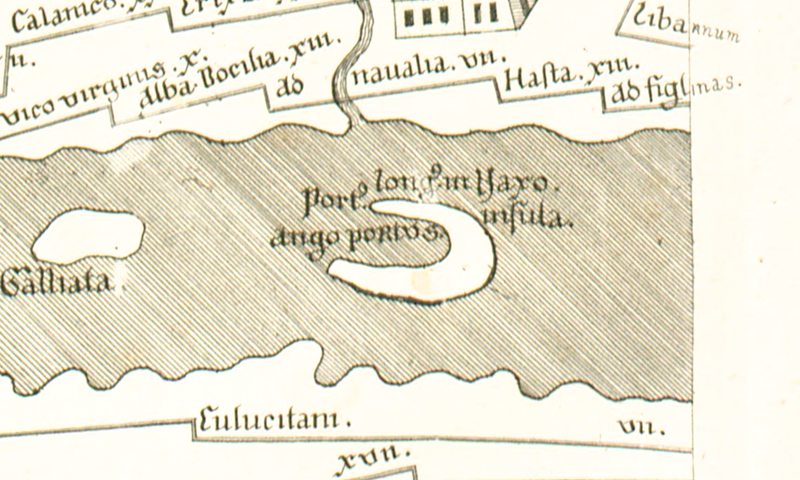
Foglio (Scheyb 1753)
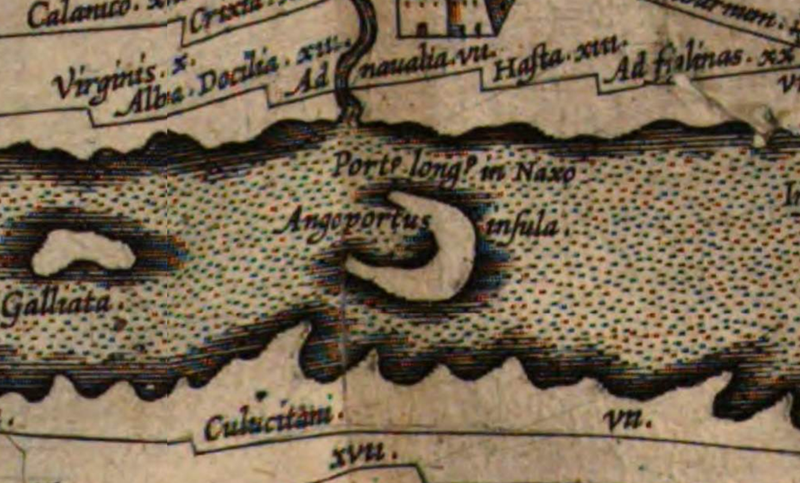
Foglio (Welser 1598)
Foglio (MSI 2025) ---
Area:

Isole del Mediterraneo

Tipo di toponimo:

nome isolato

Quadrato:

2B4 / 2B5

Colore di toponimo:

nero

Tipo di vignetta:

---

Nome (Itinerario):


Nome alternativo (dizionari):


Nome (RE):


Nome (Barrington):


Nome (TIR / TIB /altro):

Portus Longus (TIR K 32, 135, 668)

Nome (Miller):


Nome (Levi):


Nome (Ravennat):


Nome (Ptolemaios):


Plinius:


Strabo:


Datazione del toponimo sulla TP:

---

Giustificazione della datazione:


Commento al toponimo:

Kommentar (Köhner).
Alle lesen hier longus, aber könnte es mit Blick auf die Form der Insel eventuell lunatus heißen, also sichel/Mondförmig und sich damit auf die Insel beziehen?

Unklar bleibt, was mit Naxus gemeint ist

Talbert liest statt "in" "III". Auf seinem Bild ist diese eventuelle Distanzangabe besser lesbar.
https://www.cambridge.org/us/talbert/talbertdatabase/TPPlace2904.html
Dann bleibt die Frage, welche Distanz zwischen welchen Inseln angegeben wird.

Kommentar (Talbert):
Note that the end of the second word of the second line runs into the shoreline of the distinctively shaped island. It is by no means clear whether "insvla" is to be taken with the two words preceding on the same line, or instead with what is written on the line above.

ItMiller 393 reads this upper line as "Portus longus in Naxo insula", and regards Naxus as an otherwise unattested variant name for Ilva/Aethalia. I am less confident. "Port(vs)" is clear enough. I am tempted to read the next three letters as "lvi"; or possibly the number LVI ? There is then plainly a stop. After it "g", with a superscript following. The next three letters seem to be "iii"; or possibly the figure III ? Then, after a gap, "naxo". Hence: Port(vs) lvi. g-iii naxo.

TIR
PORTUS LONGUS 668
Porto Azzurro
I, Toscana, Livomo VII
Porto marittimo/stazione marittima IX/c
a. La spiaggia di Mola (moles = porto) era in epoca romana il porto di Capoliveri. A SW di Porto Azzurro (sino al 1906 frazione di Porto Longone), monete repubblicane e imperiali (Sabbadini). Nel Golfo di Mola, invece, relitto (I sec. d.C.) con carico di anfore, ceramica aretina e tubi fittili per condutture (I sec. a.C. al I sec. d.C.). Porto Azzurro (= Porto Longo in Tab. Peut.) identificata con PORTUS LORETANUS. A sud di Porto Azzurro necropoli del Profico (ad est di Capoliveri) con materiale dal IV-III a.C. al IV d.C. A est, relitto della metà del III sec. d.C., e forse un secondo della seconda metà del I sec. d.C. (o discariche portuali?). A circa 200 m dal piccolo promontorio di Punta Cera, relitto di una grande nave oneraria romana (oltre 2000 anfore) naufragata nel III sec. d.C.
b. Porto Azzurro fino al 1947 Porto Longone, nell`lsola dElba. II nome di Capoliveri sembra derivare da Caput Liberi dal nome romano Libero Liberius (Sabbadini).
c. Tab. Peut. III, 4-5 (cfr. Miller I 916, pp. 393-394).
e. Relitto. Necropoli.
f. Zecchini 1971, pp. 121, 175-176, 187; Rossi 1982, p. 170; Id. 1982a, pp. 80-85; Zecchini 1982, pp. 32-34, 97-126; Gargiullo - Okely 1993, p. 70.

Der Strand von Mola (moles = Hafen) war in römischer Zeit der Hafen von Capoliveri.
Porto Azzurro (= Porto Longo in Tab. Peut.), identifiziert mit PORTUS LORETANUS. Südlich von Porto Azzurro Nekropole von Profico (östlich von Capoliveri) mit Material von IV-III v. Chr. bis IV n. Chr.. Im Osten ein Wrack aus der Mitte des 3. Jahrhunderts n. Chr. und möglicherweise ein zweites aus der zweiten Hälfte des 1. Etwa 200 m von der kleinen Landzunge Punta Cera entfernt liegt das Wrack eines großen römischen Frachtschiffs (über 2000 Amphoren), das im 3. Jahrhundert n. Chr. gesunken ist.

b. Porto Azzurro bis 1947 Porto Longone, auf der Insel Elba. Der Name Capoliveri scheint sich von Caput Liberi, dem römischen Namen Libero Liberius (Sabbadini), abzuleiten.

Kommentar Schuol
- Portus longus in naxo insula. gehört zusammen, wie der Punkt hinter insula zeigt (Miller setzt den Punkt fälschlich und sehr irreführend hinter Naxo; Talberts Lesungsversuche sind völlig sinnfrei).
Bei Portus longus handelt es sich um das heutige Porto Azzurro, früher Porto Longone, an der Ostküste Elbas.
Was naxo hier zu suchen hat, ist mir allerdings ein Rätsel.
dann brauchen wir ja drei Datensätze: Zwei Toponyme und einmal für die Insel selbst. Oder?

Letteratura:

Desjardins, Table, p. 89, col. 1-2, no. 2.

Miller, Itineraria, Sp. 393.

Portus Longus (TIR K 32, 135, 668)

   [Standard-Literatur-Liste im PDF-Format]

Ultima modifica:

15.09.2026 14:32


Cite this page:
https://tp-online.ku.de/trefferanzeige_it.php?id=3734 [zuletzt aufgerufen am 11.11.2026]

Impressum Datenschutzerklärung