


Tabula Peutingeriana – Pantalla individual
| Topónimo (simplificado): | Cissa |
| Nombre (moderno): | Kise |
| Imagen: | 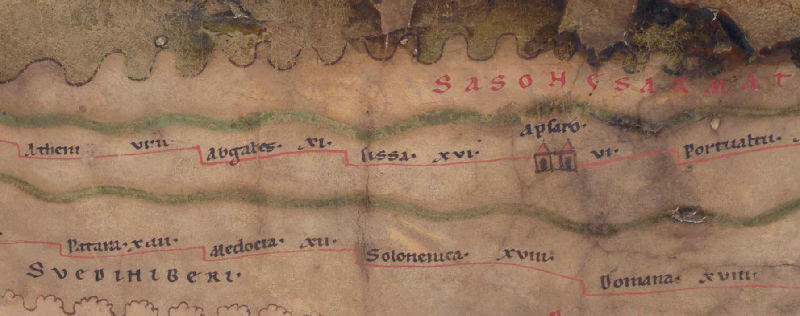 Al detalle de la imagen |
| Topónimo antes | XI Abgabes |
| Topónimo después | XVI Apsaro |
| Imagen alternativa |
 |
| Imagen (Barrington 2000) |
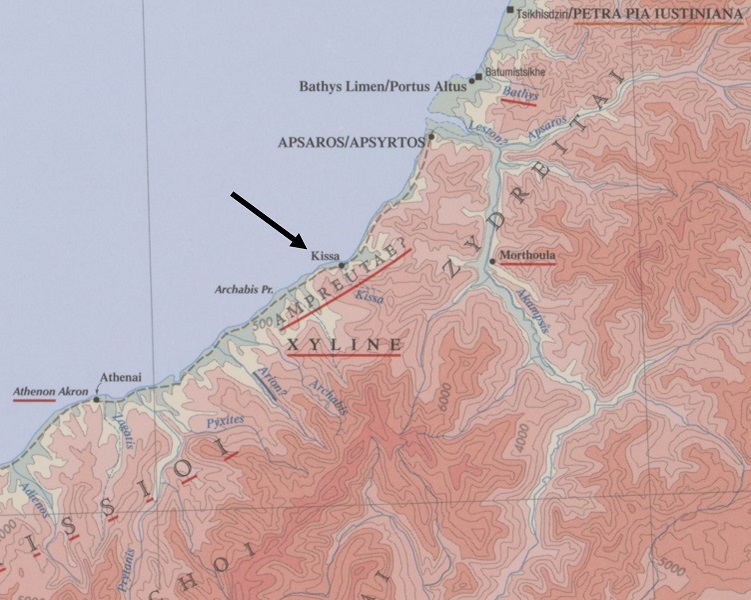 |
| Imagen (Scheyb 1753) |
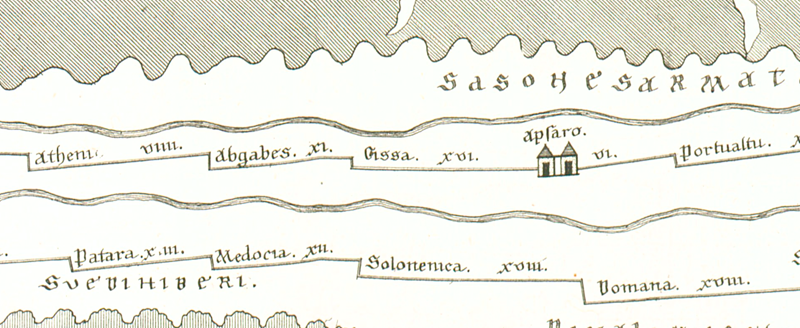 |
| Imagen (Welser 1598) | --- |
| Imagen (MSI 2025) | --- |
| Pleiades: | https://pleiades.stoa.org/places/857188 |
| Área: | Asia Menor |
| Tipo de topónimo: | Topónimo sin símbolo |
| Cuadrícula: | 9A4 |
| Color del topónimo: | negro |
| Tipo de viñeta: | --- |
| Itinerario: |
|
| Nombres alternativos (diccionarios): |
|
| Nombre A (RE): | Kissa 5 |
| Nombre B (Barrington Atlas): | Kissa (87 G3) |
| Nombre C (TIR / TIB /otros): |
|
| Nombre D (Miller): | Cissa |
| Nombre E (Levi): |
|
| Nombre F (Ravenate): | Cessa (p. 29,44; p. 92,20) |
| Nombre G (Ptolemaios): | Κίσσα ποταμοῦ ἐκβολαί (5,6,6) |
| Plinius: |
|
| Strabo: |
|
| Datación del topónimo en la TP: | Período Imperial (siglo segundo) |
| Fundamento para la datación: | Erstmals belegt bei Ptolemaios, allerdings nur die Mündung des eponymen Flusses. Für einen bewohnten Ort ist die TP der erste Beleg. |
| Comentario al topónimo: |
Das große “C” am Wortanfang, falls die Lesung korrekt ist, ist möglicherweise verstümmelt durch einen Knick oder Riss, der allerdings keine heute noch sichtbaren Schäden ím Pergament hinterlassen hat, jedoch ist auch nichts von einer Fortsetzung des Buchstabens zu sehen (s. auch Kommentar Talbert, basierend auf Autopsie im März 2003, s. https://www.cambridge.org/us/talbert/talbertdatabase/TPPlace2403.html). |
| Bibliografía: |
Bryer, A. A. M./Winfield, D. C.: The Byzantine monuments and topography of the Pontos, Washington DC 1985, 338. |
| Última elaboración: | 10.09.2025 16:11 |
Cite this page:
https://tp-online.ku.de/trefferanzeige_es.php?id=1522 [zuletzt aufgerufen am 19.04.2026]