deutsch englisch spanisch französisch italienisch
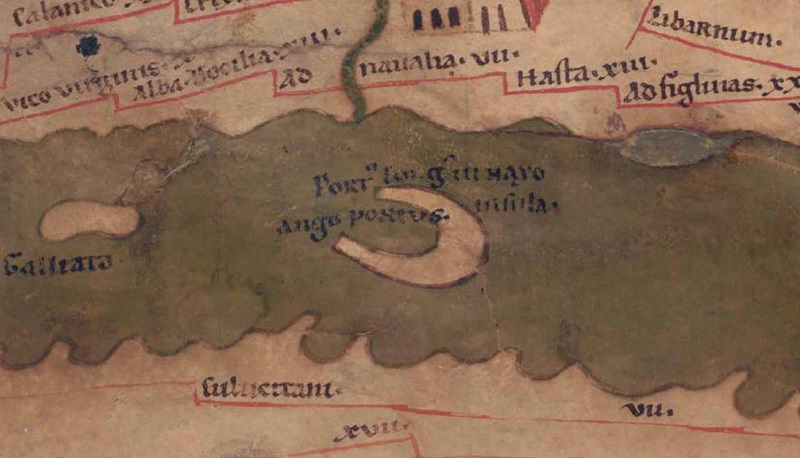
Ausschnitt aus der Tabula Peutingeriana - Rom

Tabula Peutingeriana – Einzelanzeige

Toponym TP (aufgelöst):

[Insula Ilva/Aethalia]

Name (modern):

Isola d`Elba

Bild:
Zum Bildausschnitt auf der gesamten TP
Toponym vorher
Toponym nachher
Alternatives Bild ---
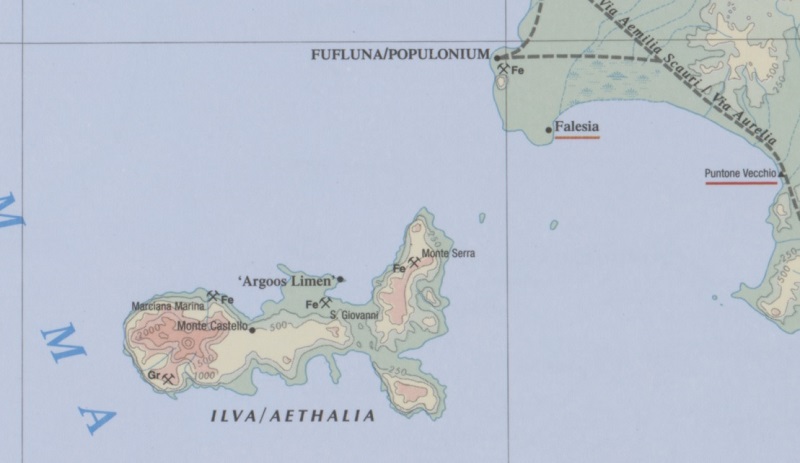
Bild (Barrington 2000)
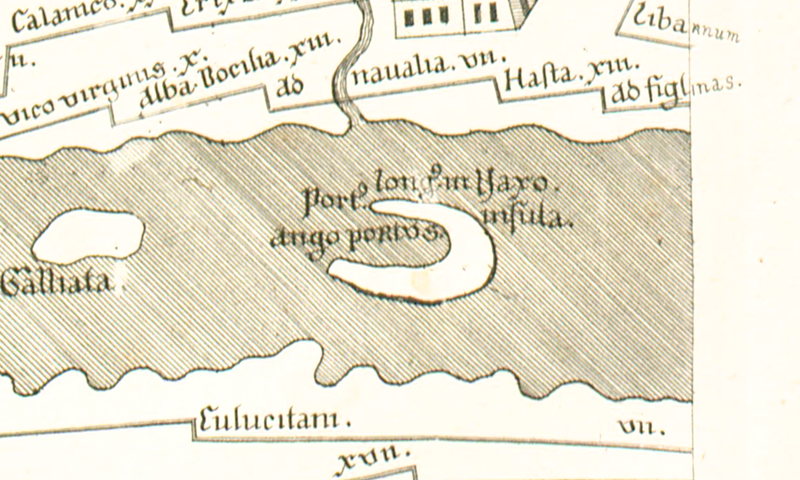
Bild (Scheyb 1753)
Bild (Welser 1598) ---
Bild (MSI 2025) ---
Pleiades: https://pleiades.stoa.org/places/403222
Großraum:

Mittelmeerinseln

Toponym Typus:

Insel

Planquadrat:

2B4 / 2B5 / 2C4 / 2C5

Farbe des Toponyms:

ohne Farbe

Vignette Typus :

---

Itinerar (ed. Cuntz):


Alternativer Name (Lexika):


RE:


Barrington Atlas:

Ilva/ Aethalia Ins. (41 C4)

TIR / TIB /sonstiges:


Miller:


Levi:


Ravennat:


Ptolemaios (ed. Stückelberger / Grasshoff):


Plinius:


Strabo:

5,2,6

Autor (Hellenismus / Späte Republik):


Datierung des Toponyms auf der TP:

---

Begründung zur Datierung:


Kommentar zum Toponym:

Kommentar (Talbert):
Note that the end of the second word of the second line runs into the shoreline of the distinctively shaped island. It is by no means clear whether "insvla" is to be taken with the two words preceding on the same line, or instead with what is written on the line above.

ItMiller 393 reads this upper line as "Portus longus in Naxo insula", and regards Naxus as an otherwise unattested variant name for Ilva/Aethalia. I am less confident. "Port(vs)" is clear enough. I am tempted to read the next three letters as "lvi"; or possibly the number LVI ? There is then plainly a stop. After it "g", with a superscript following. The next three letters seem to be "iii"; or possibly the figure III ? Then, after a gap, "naxo". Hence: Port(vs) lvi. g-iii naxo.

Vergil
«Sescentos illi dederat Populonia mater expertos belli iuvenes, ast Ilva trecentos, insula inexhaustis Chalybum generosa metallis.»

Strab. 5,2,6 C224:
In Aithalia ist ein Hafen Argoos, der seinen Namen, sagt man, von der Argo hat. Dorthin sei nämlich Iason gefahren auf der Suche nach dem Wohnsitz der Kirke, da Medea ihre Tante besuchen wollte; daher seien auch von den Abschabseln, die die Argonauten damals machten und die fest wurden, die Kieselsteine an der Küste noch heute verschiedenfarbig. Solche Fabeleien stützen unsere Behauptung (vgl. 20, 9 ff. und siehe zu 18,31 - 27,6), dass Homer nicht alles selber erfunden hat, sondern Vieles dieser Art hatte erzählen hören und selber nur Weiten der Entfernung und Entlegenheit hinzugefügt hat, und ebenso wie er Odysseus in den Ozean hinausversetzt, es ähnlich auch mit Iason gemacht hat, da sowohl dieser als jener, ebenso wie Menelaos, eine Irrfahrt zu bestehen hatte. Soviel über Aithalia.

Pleiades
Hecat. FGrH 1 F 59
Plin., NH (Mayhoff: PHI) 3.81.4
Str. (Meineke: Perseus) 5.2.6

Datierung (Barrington)
C4 Ilva/
Aethalia Ins.
Elba RE

Heaktaios F 59
Stephanos of Byzantion, Ethnika s.v. Αἰθάλη

Αἰθάλη· νῆσος Τυρσηνῶν. ῾Εκαταῖος Εὐρώπηι. ἔοικε δὲ κεκλῆσθαι διὰ τὸ σίδηρον ἔχειν τὸν ἐν αἰθάληι τὴν ἐργασίαν ἐχοντα. Φίλιστος δὲ ἐν ε̄ Σικελικῶν Αἰθάλειαν αὐτὴν καλεῖ· καὶ ῾Ηρωδιανὸς καὶ ῏Ωρος. Πολύβιος δὲ ἐν λ̄δ λέγει Αἰθάλειαν τὴν Λῆμνον καλεῖσθαι· … δύναται τὸ Αἰθαλίτης ἀντὶ τοῦ Χῖος. οὕτω γὰρ ἡ Χῖος ἐλέγετο.
Stephanos of Byzantion, Ethnika s.v. Αἰθάλη

Aithale. An island of the Etruscans. Hekataios mentions it in his Europe. It seems to have been so named because of its resources of iron, which produced soot (aithale) during its manufacture. Philistos (BNJ 556 F 21) in the fifth book of his Sicilian History calls it Aithaleia; so do Herodian (1.275.31 Lentz) and Oros. Polybios, in his thirty-fourth book (34.11.4), claims that Lemnos is called Aithaleia … It is possible to use the ethnic adjective Aithalite in the place of Chian, for Chios used to be called by this name.

Literatur:


   [Standard-Literatur-Liste im PDF-Format]

Letzte Bearbeitung:

15.09.2026 14:30

Druckversion erstellen


Cite this page:
https://tp-online.ku.de/trefferanzeige.php?id=3747 [zuletzt aufgerufen am 03.10.2026]

Impressum Datenschutzerklärung